Prologue
What this site is — and why
"AKTE WÖLFE" is for lovers and haters of VfL Wolfsburg alike. History becomes legend, legend becomes myth. And myth becomes cult — or a reason for eternal second-hand embarrassment, depending on the event.
"Wolfsburg — that’s not even a real city." VW factory, Autostadt, football. In that order. But in 2009, the works team became German champions — under Felix Magath, with Grafite and Džeko, with a goal against Bayern that wrote football history. After that? A return to normality, Champions League against Real Madrid, and a managerial merry-go-round in permanent operation.
But this site goes beyond mere celebration or hatred. Akte Wölfe is structured in three parts: The Club Dossier tells the story — triumphs, tragedies, scandals, heroes and failures across 12 chapters. Match Intelligence delivers the live data a professional needs: squad, statistics, head-to-head, injuries, form. And Predictions brings it all together — with prediction markets.
Prediction markets are not gambling. In traditional sports betting, the masses lose — the money goes to the bookmaker who has built in his margin. Betting exchanges are similar: commissions on winnings, liquidity shortages and spread eat into returns. Prediction markets work fundamentally differently. There is no bookmaker who lets the house win. Instead, money flows from those who don't know to those who get it right — with risk management, portfolio diversification and disciplined capital deployment. You can trade 24/7, build and close positions, and wait for the binary resolution of the event. Those who understand it are not speculating — they're engaged in systematic trading.
Akte Wölfe is part of Akte Bundesliga — the same concept for all 18 Bundesliga clubs. Each club gets its own dossier, its own intelligence, its own predictions. The big picture can be found at aktebundesliga.net.
Profile
Facts, figures and milestones
Steckbrief – Facts, figures and milestones
Verein für Leibesübungen Wolfsburg e.V., founded on September 12, 1945, spun off its professional football division in 2001 to create today's VfL Wolfsburg-Fußball GmbH — known simply as VfL Wolfsburg.
Through a special DFL dispensation, the Bundesliga's standard 50+1 rule is circumvented, meaning the "Wolves" have been a wholly-owned subsidiary of Volkswagen AG, independent of the registered club, since 2007.
With approximately 20,000 members, VfL Wolfsburg are among the largest sports clubs in Lower Saxony and, in the 2019/20 season, the only Lower Saxon football team in the Bundesliga. The first team have played (as of December 2019) in the top German division without interruption since their 1997 promotion, winning the German championship in 2009 and the DFB-Pokal in 2015.
The first team's home ground is the Volkswagen Arena in the Allerpark, holding 30,000 spectators. Opened in 2002, the arena is also used for concerts. The VfL-Stadion am Elsterweg, inaugurated at the club's founding in 1947, holds 21,600 and is still used by the women's youth teams. It is now partly listed as a protected monument.
Good to Know
What few people know
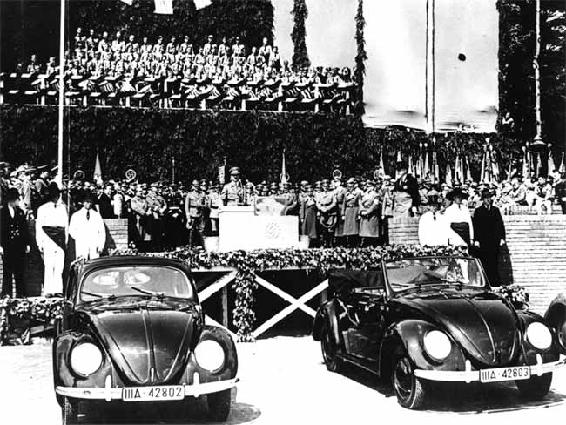
On May 26, 1938, Adolf Hitler laid the foundation stone for a Volkswagen factory originally intended to produce the KdF-Wagen (Kraft durch Freude — "Strength through Joy"). The city of Wolfsburg was founded for this purpose and initially named "City of the Strength-through-Joy Car near Fallersleben." The later VW Beetle found a home, and Wolfsburg — as the city was only called after the war — was stamped as a propaganda product of the Nazi regime.
The founding stories of the city and the club are well known. What few people know: VfL Wolfsburg nearly dissolved just three months after its founding. In December 1945, practically the entire first football team split from the VfL to independently found 1. FC Wolfsburg. Coach Josef Meyer was not amused — he had to rebuild a squad from scratch.
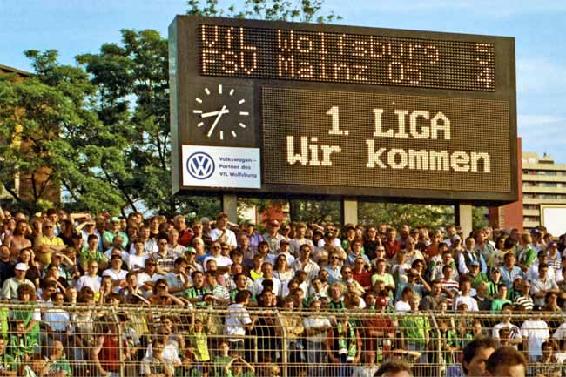
Also little known outside the city: Wolfsburg did enter the 2. Bundesliga as a founding member in 1974. But in their debut year they went straight back down. A further promotion and relegation followed before the Wolves disappeared from professional football entirely for 15 years in 1977. Only in 1992 did they return to the 2. Bundesliga under coach Uwe Erkenbrecher.
What is often overlooked: VfL Wolfsburg's women's team are considerably more successful than the men. The 2012/13 season was their finest. Having finished second the previous year, the Wolves women entered the Champions League for the first time and wrote history. In their final home match against Bad Neuenahr, Ralf Kellermann's side first clinched the German championship with ease, then won the DFB-Pokal and the Champions League — a historic treble.
For the Haters
Embarrassing disasters and major defeats
UEFA Cup 2008/09: A great international success and a great humiliation both belong to the 2008/09 season. Having reached the quarter-finals, Wolfsburg were eliminated by Fulham — a crushing disappointment given the heights the team had reached domestically.
Hannover 96 of all teams: Painful because it came in the Bundesliga against the local rivals — the 0-4 home defeat against Hannover 96 ranks among the most humiliating results in Wolfsburg's history.
Against FC Bayern: Wolfsburg's heaviest Bundesliga defeats have come against FC Bayern München, including multiple thrashings at the hands of the record champions.
Even worse: More painful still was the 2-7 home defeat against Werder Bremen on September 19, 1999 — under Claudio Pizarro's merciless onslaught, it became one of the darkest afternoons at the Volkswagen Arena.
Robert Lewandowski against VfL Wolfsburg: On September 22, 2015, Robert Lewandowski scored five goals and set four world records against Wolfsburg — all in just nine minutes after coming on as a substitute. A Bundesliga moment that went around the world.
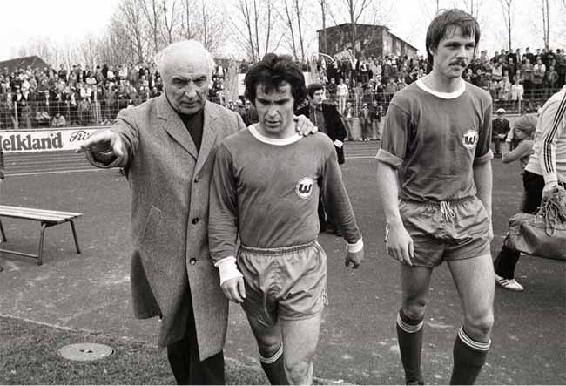
Heaviest away defeat: The heaviest away defeat for VfL Wolfsburg came, incidentally, in the old 2. Bundesliga — a hammering that still stings in the club's memory.
The 1976/77 season in general: With 11 consecutive defeats, 27 losses in total, it was a campaign of pure misery — the worst season in the club's history, ending in relegation and the start of a 15-year exile from professional football.
For the Lovers
Key triumphs and major victories
German champions 2009: The greatest success in VfL's men's history is the German championship in 2009 under Felix Magath. With Grafite and Edin Džeko forming a lethal strike partnership, the Wolves stormed to an improbable title.
Quarter-final against Real Madrid: The title immediately ushered in the next first — Champions League participation. In the 2009/10 campaign, Wolfsburg faced Real Madrid in the quarter-finals, losing narrowly but announcing themselves on the European stage.
Two quarter-finals: VfL Wolfsburg reached the quarter-finals of a European competition twice (as of December 2019) — once in the Champions League and once in the Europa League.
Europa League: On the international stage, the male Wolves also reached the quarter-finals of the Europa League twice by December 2019 — proving their European credentials beyond the one extraordinary championship season.
Cup final as a second-division side: In the 1994/95 season, VfL reached the DFB-Pokal final as a 2. Bundesliga club. Despite the 0-3 defeat against Borussia Mönchengladbach, the run was a milestone on the road to the top flight.
Co-founders of the 2. Bundesliga: After the 1974 World Cup in Germany, the new two-tier 2. Bundesliga was created. Wolfsburg were among the founding members — an often-forgotten detail in the club's history.
Reserves beat the champions: A cup sensation on August 25, 2001 in Wolfsburg, when the VfL reserves (then in the Regionalliga) knocked out reigning champions FC Bayern München in the first round of the DFB-Pokal.
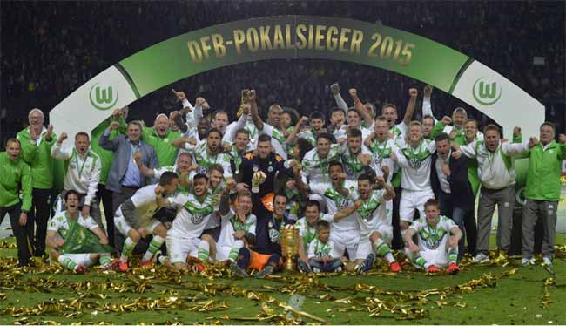
Double cup triumph in 2015: Both the men's and women's teams won the DFB-Pokal in their respective competitions — a unique double for the green and whites.
Never again 2. Liga: Since their first promotion in 1997, the Wolves have been an uninterrupted member of the Bundesliga. Only seven other clubs have a longer continuous top-flight run (as of December 2019).
Most Important Persons
The men who shaped the club
"The Unbeatable." UEFA Cup, six DFB-Pokal triumphs, the Champions League, five German championship titles, Olympic gold — as of December 2019. What remains a dream for the men is long since reality for striker Alexandra Popp, the most decorated player in VfL Wolfsburg's history…
"The Promoter." Willi Reimann coached VfL Wolfsburg from October 23, 1995 to March 17, 1998, guiding the Wolves through their first 26 Bundesliga matches. He made himself immortal with the 1997 promotion after a 5-4 thriller in the unofficial local derby — a night Wolfsburg fans will never forget…
"The Darling." The former captain and fan favourite made 256 Bundesliga appearances for the green and whites between 2007 and 2017, holding the club record as of December 2019. He experienced triumphs and defeats, the championship and relegation battles alike…
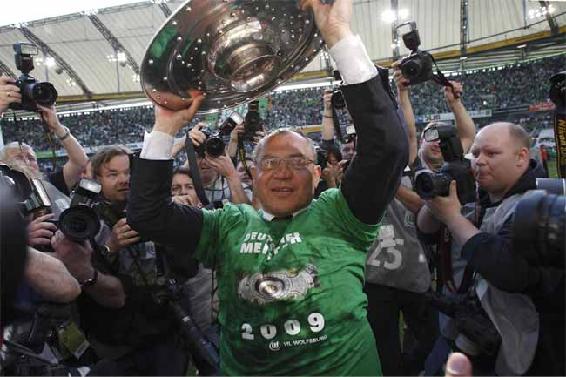
"The Successful God-Emperor" — Episode I. In 2007, "Quaelix" arrived as coach, manager and managing director. He spun the personnel carousel and led the team via the 2007/08 cup semi-final to the most unexpected German championship in 2009 — Wolfsburg's finest hour…
Personae Non Gratae
The men fans love to hate
"The Unsuccessful God-Emperor" — Episode II. After a spell at Schalke 04, Felix Magath (or his clone, or perhaps his wayward twin) returned to Wolfsburg. Whoever it was, he could not replicate the brilliance of Episode I. The sequel was a flop…
"The Unfaithful." The midfielder arrived from Turin in 2010 for 15 million euros. He made 77 appearances in green and white, scoring 19 goals. On the final matchday of the 2010/11 season, he left the team bus without a word — and never came back. A silent desertion that infuriated the fans…
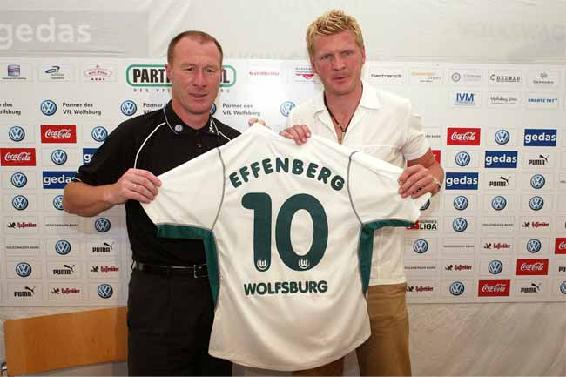
"The Overweight One." On April 2, 2003, Stefan Effenberg left VfL Wolfsburg after just 19 appearances — as abruptly as he had arrived. The then-34-year-old was offended. Coach Jürgen Röber refused to grant him special privileges, and Effenberg, visibly out of shape, walked away…
Tragic
Those who suffered misfortune
Krzysztof Nowak: Wolfgang Wolf fought back tears. The hard-nosed Palatinate native, a tough opponent in 248 Bundesliga matches for 1. FC Kaiserslautern, could barely contain his emotions. In November 2002, as Nowak's illness became public, the Wolfsburg coach took an honour lap with his stricken midfielder in the stadium that would soon no longer host Bundesliga matches. Nowak, diagnosed with ALS, died on May 26, 2005 at the age of just 29.
At the time Wolf and Nowak took that honour lap, the midfielder had already lost most of his motor functions. ALS — amyotrophic lateral sclerosis — had stripped away the body of a professional athlete in a matter of months. The Wolfsburg public paid tribute to their stricken hero.
"Numb and weak" — that is how Nowak described the first symptoms of his illness. A numbness in the arms was the first sign. What followed was a rapid and merciless deterioration. The Polish international, once one of the most elegant midfielders in the Bundesliga, became a symbol of how fragile life can be.
Junior Malanda: Junior Malanda was running late. The Wolfsburg player, signed from Zulte Waregem in 2013 for a fee of €1.7 million, had missed the Wolves' departure for their winter training camp in Cape Town, South Africa because he absolutely had to attend a New Year's Eve party. On January 10, 2015, the 20-year-old Belgian died in a car accident on the A2 motorway near Porta Westfalica. German football lost one of its most exciting young talents.
In the Bundesliga opener of the 2014/15 season at FC Bayern München (1-2), all of football Germany witnessed what this young man was capable of. Fearless, athletic and technically gifted, Malanda had the world at his feet. His death shook the entire Bundesliga.
The match between chasers Wolfsburg and runaway leaders Bayern München became one of the most emotional in Bundesliga history. The Wolves won 4-1, and the performance was dedicated to Malanda. His number 19 shirt hung in the dugout throughout the match.
OMG — Oh My God
You can't be serious
VfL Wolfsburg are no traditional club. Rather the opposite. And it shows:
Wolfsburg have the fewest fans in the Bundesliga! With 21,500 fans (Statista, September 2019), Wolfsburg rank dead last among Bundesliga clubs for fan numbers. The Volkswagen Arena's 30,000 capacity rarely comes under pressure.
Pointlessly pointless! For many Wolfsburg fans, there is only one true logo — the one with the crenellated W. The problem: the current logo, introduced in 2002, replaced the beloved original and has been a sore point ever since.
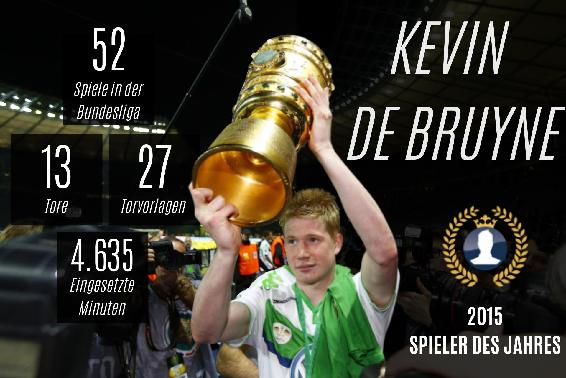
De Bruyne accidentally pledges eternal loyalty! In August 2015, the hotly courted Belgian Kevin De Bruyne fell victim to a prank when fake fan chants declared he had sworn to stay at VfL forever — just days before his record transfer to Manchester City.
Rule knowledge, lesson five! The career of long-serving VfL manager Peter Pander, who oversaw the Bundesliga promotion and the early years in the top flight, ended in acrimony over a bizarre rule dispute that exposed the club's amateur roots.
Fans vs. club leadership! Just two weeks into the job, Bruno Labbadia was greeted with "We're going down, we're coming back up, you're not coming with us" banners in March 2018 — a hostile welcome that set the tone for a turbulent tenure.
Grammatical difficulties! In 2016, during the Bundesliga match against Borussia Mönchengladbach (2-1), Wolfsburg fans embarrassed themselves with a banner containing a glaring grammatical error — gleefully mocked across social media.
Atmosphere deficit! Wolfsburg fans are generally considered gentle and not particularly fanatical. Not only the "Wölficlub" children's section but the entire stadium can feel eerily quiet — a running joke among rival supporters.
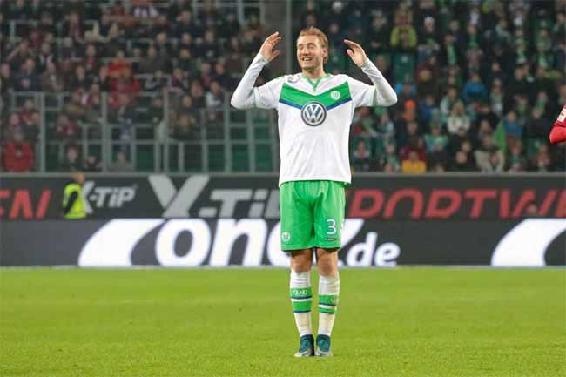
Glamour in Wolfsburg! "The Lord" was supposed to provide it. "Lord" Nicklas Bendtner. But it went wrong. In April 2016, VfL terminated Bendtner's contract after repeated disciplinary issues. The Danish striker's lavish lifestyle clashed spectacularly with the understated Wolfsburg ethos.
Fun Facts
Knowledge for blowhards, braggadocios and connoisseurs
Julian Draxler: At €37 million, Julian Draxler was VfL Wolfsburg's most expensive signing by the end of December 2019 — a transfer that never quite lived up to its price tag.
Most expensive export: Kevin De Bruyne moved from Wolfsburg to Manchester City in the summer of 2015 for the then-Bundesliga record fee — a transfer that signalled Wolfsburg's brief status as a European destination club.
The club colours: Bernward Elberskirch, district youth welfare officer in 1945, stumbled upon ten football shirts during the search for kit — all green. And so the Wolves became green and white, a colour scheme born from post-war scarcity rather than design.
No "real" Lower Saxony derby: Eintracht Braunschweig fans and Hannover 96 supporters only see each other as the true local rival. Wolfsburg, despite geographical proximity, are not considered a proper derby opponent by either side — a snub that stings.
Pelé in Wolfsburg: Brazilian football legend Pelé visited Wolfsburg in the summer of 1961 to play a friendly with his home club Santos FC. An attendance of 32,000 packed the stadium — a record at the time.
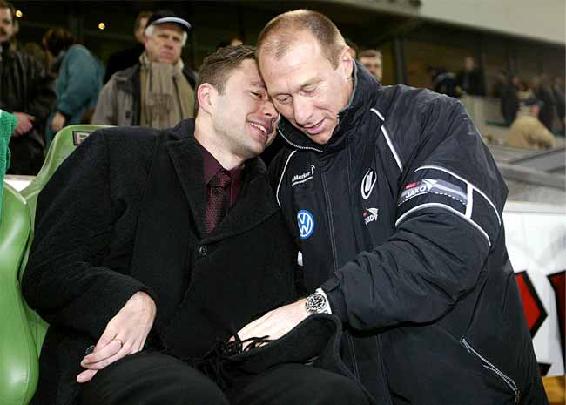
Wölfi and the breathlessness: The Wolfsburg mascot Wölfi once caused a small VfL fan acute breathlessness — a viral moment that became one of the club's most-shared clips on social media.
Penalties: Wolfsburg were involved in the first-ever penalty shootout in DFB-Pokal history. Against Schalke 04, the Wolves lost the shootout — a dubious honour.
The official anthem: The official Wolves anthem is "Grün-Weiß VfL," but a different song is far better known: the terrace chant that echoes around the Volkswagen Arena on matchdays.
Works club forever: Title in hand and VW at their backs. Without the car manufacturer, the club's successes would be unthinkable. VfL Wolfsburg remain, for better or worse, Germany's most prominent works team.
Special Moments
The factory boy from São Paulo and the goal that changed everything
It is spring in Wolfsburg. The first crocuses are poking their heads out of the ground on either side of the footpath to the Volkswagen Arena. It is April 4, 2009. The day that will change everything for VfL Wolfsburg.
In the catacombs of the stadium sits a young man whose name, in a few hours, everyone will know. Edinaldo Batista Libânio — known to the football world as Grafite. The Brazilian striker is calm, focused, almost meditative. He has a feeling today will be special.
Born in the hinterland of the megacity São Paulo, Edinaldo made his living selling bin bags. With the money he earned, the boy could afford a ball. Football was the escape route from the favela — a path that would lead him, via France, to the flatlands of Lower Saxony.
Edinaldo "Grafite" Libânio smiles as he, surrounded by his teammates, walks onto the home turf. He senses it: 30,000 expectant faces, the smell of freshly cut grass, the hum of a Bundesliga Saturday. His opposite number today: FC Bayern München.
While in 2007 he is still playing for French promoted side Le Mans UC, 1,000 kilometres away in Wolfsburg something is brewing. The Wolves are about to enter the most extraordinary chapter in their history.
Coach Felix Magath leaves Bayern. On June 15, 2007, barely two months before the start of the 2007/08 season, "Quaelix" is announced as VfL Wolfsburg's new head coach, manager and managing director. The appointment sends shockwaves through the Bundesliga.
It is Saturday, April 4, 2009, 4:47 pm, when the Brazilian Grafite receives the ball. What follows is pure football art. A backheel flick, a turn, a devastating finish past Oliver Kahn's successor — the goal of the season, the goal that encapsulates an entire championship campaign.
It is the goal to make it 5-1. The goal for the final score. The goal that crystallises Wolfsburg's outstanding season. The Wolves will become German champions — the most improbable title in Bundesliga history.
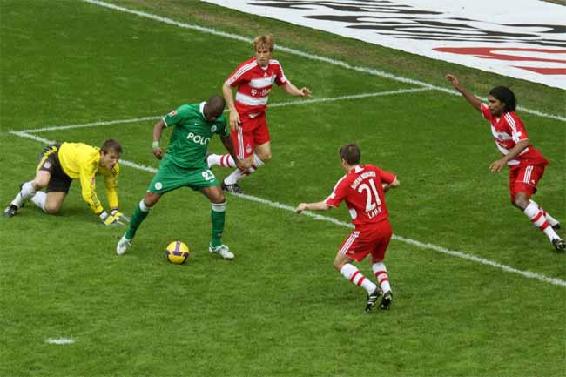
Sometimes it is the small things that make a moment truly special. A turn at the right instant, a backheel at the perfect angle, a finish of such audacity that even the opposition can only applaud. Grafite's goal against Bayern was all of that — and more.
9. Autor: Sophie Hargesheimer↩
Wise Words
Quotes for eternity
"When I have a child, I don't think about VfL Wolfsburg's planning. I've got my own head on that."
Maximilian Arnold, VfL Wolfsburg midfielder"Let's not get carried away. We're only just starting to build the church."
VfL Wolfsburg coach Bruno Labbadia"It's traditionally the case that VfL Wolfsburg don't get anything in Freiburg. We stuck to that tradition."
VfL Wolfsburg coach Felix Magath"That was a rocket start — short and fast. But we couldn't maintain that level beyond the first 90 seconds."
VfL Wolfsburg coach Bruno Labbadia"We're not playing district league football here, where you have a barbecue and beers afterwards."
VfL Wolfsburg coach Felix Magath"I can't live in Wolfsburg."
Wife of HSV striker Valdas Ivanauskas after being linked with a move to VfL"Wolfsburg — that's not even a real city."
Hannover 96 midfielder Sergio Pinto before the home match against VfL Wolfsburg